
Welcome to the Neurobiology of Insect Olfaction Lab!
Matt Bertone
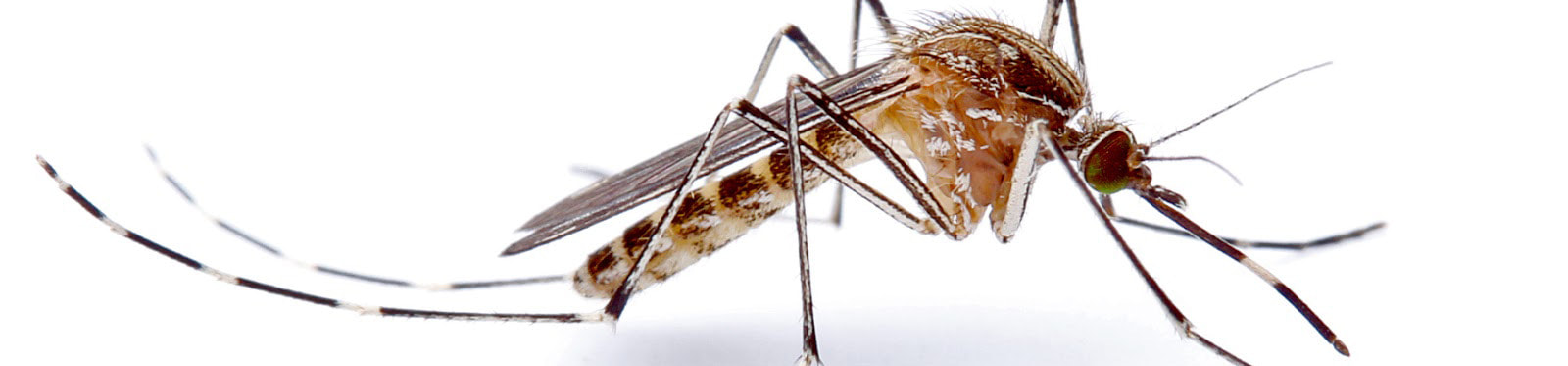
The subtle reign of smell on our sensory perception is undeniable. It informs us of attractive prospects and warns us of potential dangers. Are insects different from us in this respect? Can we learn or perhaps co-opt their olfactory system to our benefit? Mosquitoes are the perfect model to explore these questions. First, they are universally despised and their use for scientific purposes does not raise ethical concerns. Indeed, this pest of bad repute remains the most dangerous animal on Earth. One kiss from a female mosquito causes an unpleasant itch at best and may inject into your bloodstream unsavory microscopic visitors. What good can come out of mosquito research? Our research group aims to study the mosquito nose in all its intricacies out of sheer curiosity but also to design fatal smells to the mosquito, as well as to develop insect-inspired biosensors.
Olfactory-mediated behaviors
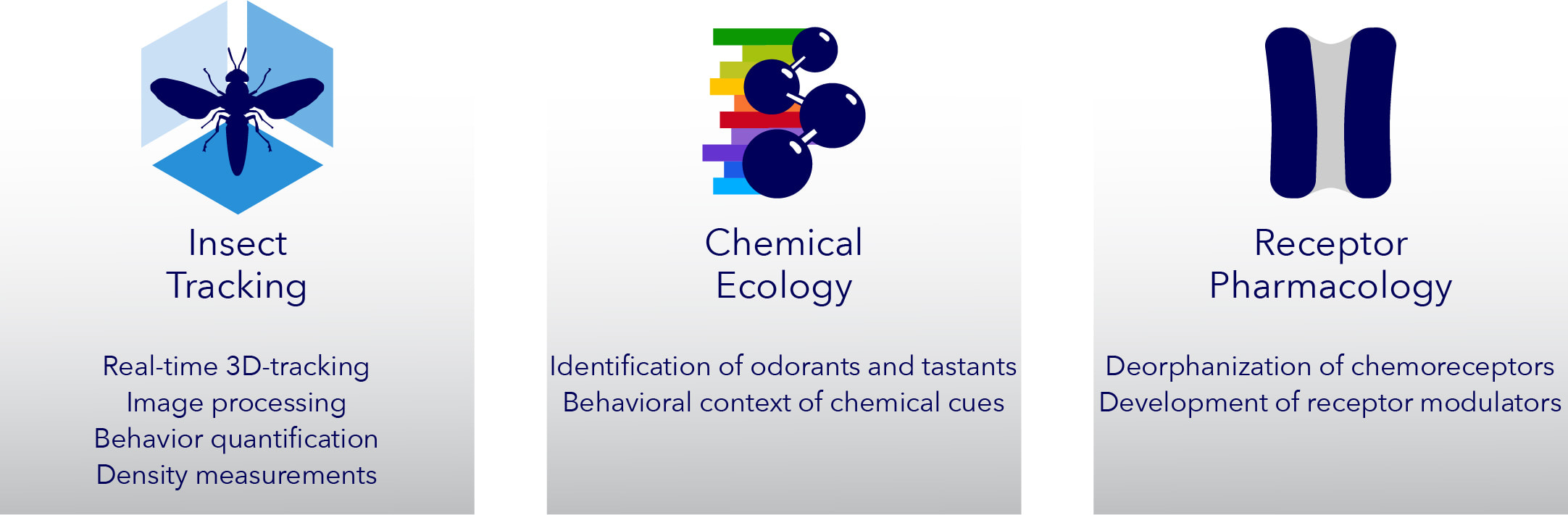
What are the ecological contexts of odorant receptor function?
In order to best apply our knowledge of olfaction, especially to monitor and control insect pests (e.g., attractants), we need to understand the what, where and when of mosquito olfaction.
Are odorant receptors druggable targets?
By studying odorant receptor ligand relationships, we aim to develop environmentally friendly chemical formulations (e.g., insect repellents) tailored to control mosquito behavior.
In order to best apply our knowledge of olfaction, especially to monitor and control insect pests (e.g., attractants), we need to understand the what, where and when of mosquito olfaction.
Are odorant receptors druggable targets?
By studying odorant receptor ligand relationships, we aim to develop environmentally friendly chemical formulations (e.g., insect repellents) tailored to control mosquito behavior.
Odorant receptor function: proxy to exploring the role of mosquito attractants.
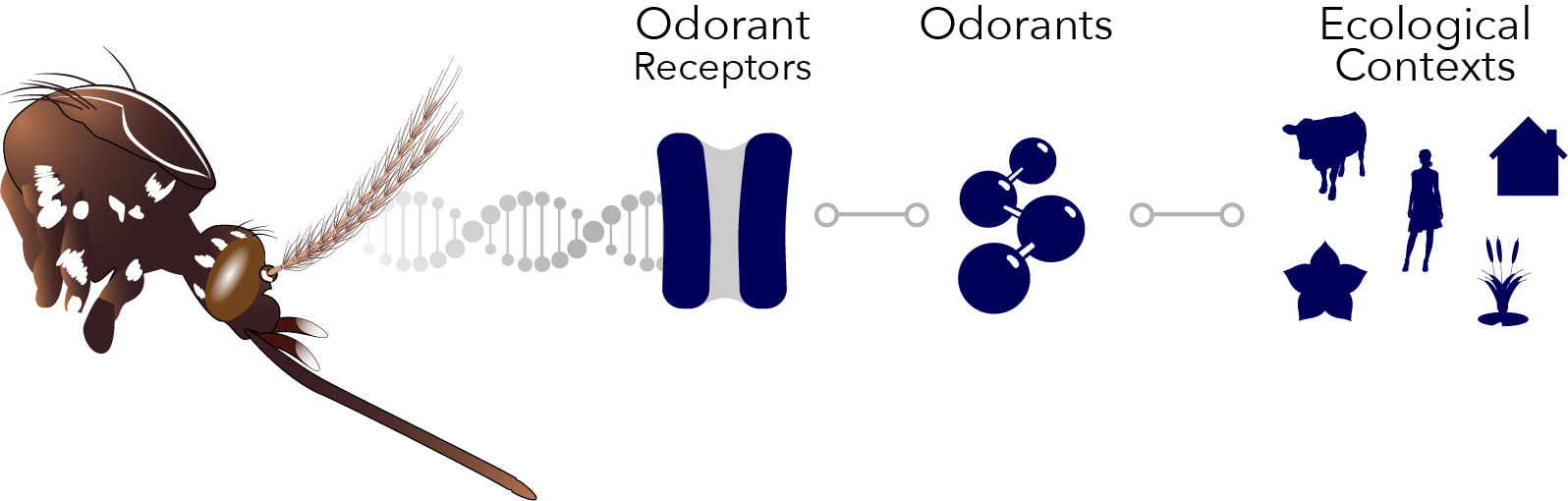
We use odorant receptors to discover candidate semiochemicals and their ecological roles (reverse chemical ecology). What constitutes a mosquito semiochemical in the context of olfaction? The challenge is two-folds:
- To match an OR to a cognate odorant.
- To infer the ecological role of cognate odorant receptor-odorant pairs.
